Wednesday, September 17, 2014

Federalists vs. Anti-Federalists

Happy Constitution Day, September 17, 2014!

On September 17, 1787, the Founders shared the Constitution with the American public. Over the next year, Americans debated whether to approve the new Constitution. Federalists were in favor of ratification, and the anti-Federalists wanted to see it rejected.

Your prompt: Compare and contrast the views of Anti-Federalist Melancton Smith and Federalist Alexander Hamilton in a well written paragraph.

Task: Make sure your paragraph has the following elements:

  • Explaining how each felt about representation in the new Constitution
  • Explaining what kind of government each wanted to see
  • From the document text, infer what kinds of people  supported the Federalists and anti-Federalists -- explain what led you to that inference
  • Use brief quotations from the texts to support your ideas -- make sure you explain any quotes that you use


Tuesday, September 9, 2014

Declaration of Independence

Our students have been analyzing the Declaration of Independence, and have been looking at the work of two historians, Bernard Bailyn and Howard Zinn, who answered the question, "Why did the Founders write the Declaration of Independence?"

Now, the students will explain which historian makes a better case. In a well written paragraph,  the students will respond to this prompt:

  • Contrast Bernard Bailyn and Howard Zinn's ideas about the Declaration of Independence
    • Explain the main ideas of Bailyn and Zinn. Use short quotes from each historian to support your writing
    • Find one example from the text of the Declaration that supports Bailyn, and 1 that supports  Zinn. Use short quotes from the text, and explain how each supports the historian
    • In a short conclusion, explain which historian is correct, and why


Wednesday, August 27, 2014

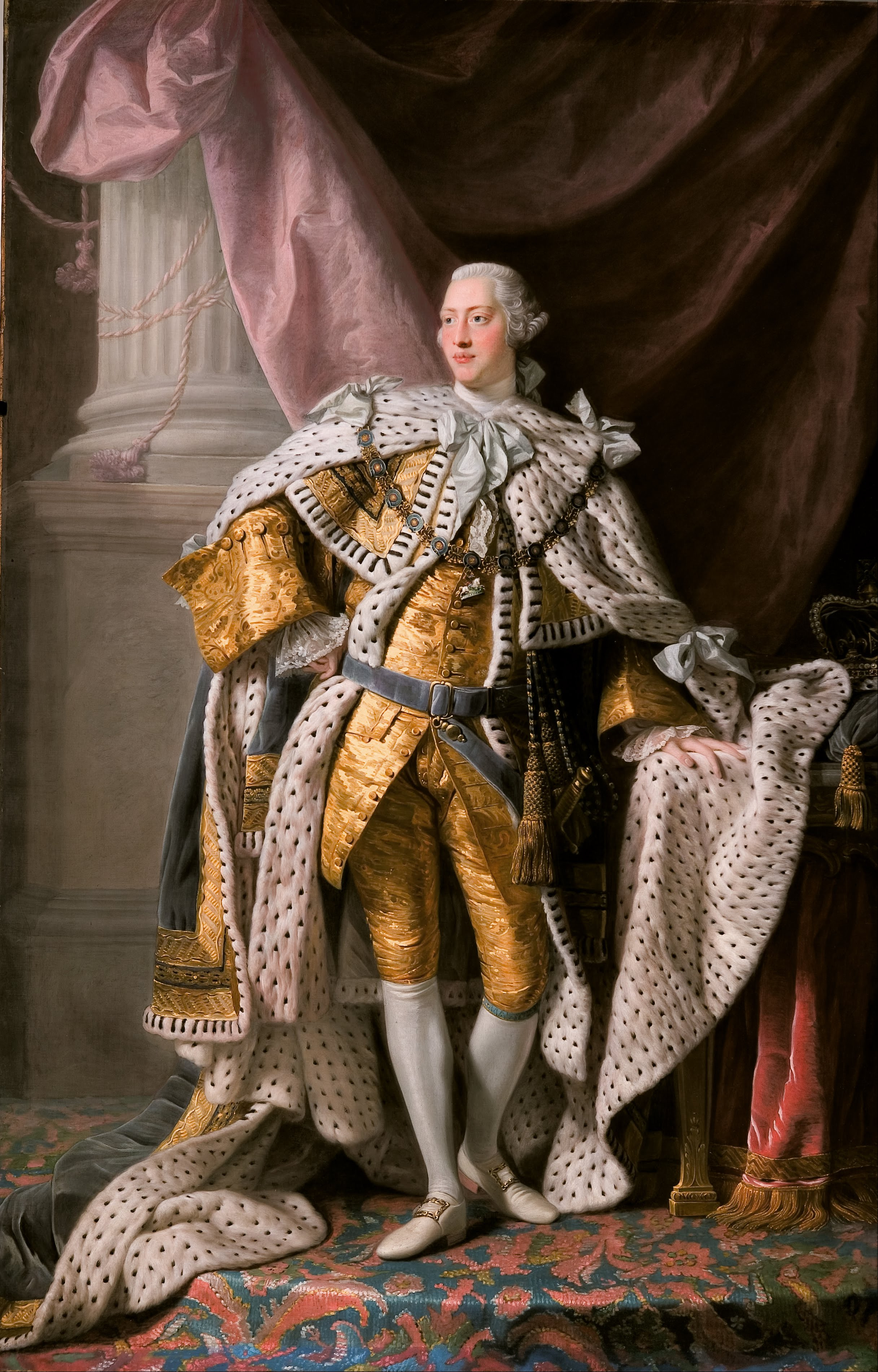
Why did some American colonists support the King of England?

When most people think of the events leading up to the American Revolution, they think of the Patriots, who opposed the King. However, as you have read, about 1/3 of American colonists supported the King, and opposed independence. They were known as Loyalists, and their story is not as well known.

Your assignment is to create an extended paragraph that answers these questions:
  • Why did the Loyalists support the King and oppose independence? Be sure to cite specific primary sources, and use at least one brief quote.
  • How do you think that Patriots might have responded to the Loyalists' arguments?
  • Which side do you think had a better argument, and why?
King George III

Monday, March 24, 2014

Did Lincoln free the slaves, or did the slaves free themselves?

Abraham Lincoln's Emancipation Proclamation said that on January 1, 1863, all slaves held in Southern states would be "forever free." President Lincoln himself believed that if anyone remembered his achievements as president, the Emancipation Proclamation would be what they remembered about him. However, historians have pointed out that Lincoln's proclamation did not free slaves in border states that were still part of the Union, and did not free slaves in the Confederate states unless they were liberated by the Union army. Others have claimed that the slaves themselves actually should get credit for obtaining their own freedom.

Your assignment is to use primary and secondary sources to write a one-paragraph response that answers this important historical question: "Did Lincoln free the slaves, or did the slaves free themselves?"

(The image below is Lincoln's signature on the Emancipation Proclamation. It is one of the few documents that President Lincoln signed with his full time. He usually signed, "A. Lincoln" to most documents.)

Friday, March 7, 2014

Frederick Douglass: What is the 4th of July to a Slave?

On July 5, 1852, abolitionist leader Frederick Douglass made a speech in Rochester, New York, to 500-600 members of the Ladies Anti-Slavery Society and others. The speech is known as "What is the 4th of July to a slave?" You have been studying and analyzing the speech during the last week. Today, you are going to work with a partner to answer three questions. about the speech. Make sure that you remember to cite evidence directly from Mr. Douglass'  speech.
Start your entry with your class period, and both first names and last initials (example: P1 Sammie A and Sally B)

1. Why is the 4th of July such an especially unpleasant day for enslaved people? Be sure to cite evident from the text to support your answer.
2. Who does Frederick Douglass blame for the continuation of slavery in America? Be sure to cite evidence from the text to support your answer.
3. Douglass says that he "has hope" for the abolition of slavery in the United States. On what does he base that hope? Be sure to cite evidence from the text to support your answer.

Thursday, February 20, 2014

Was Nat Turner a hero or a madman?

Nat Turner led the most important slave revolt in US History. Although it was ultimately unsuccessful, it forced changes in the way slavery operated in the South, and coincided with the establishment of the abolitionist movement in the northern states. However, as the woodcut below shows, while some consider Turner to be a hero, others saw him as a fanatic, insane, and evil man. You read 3 primary sources that describe Nat Turner in very different ways.

Now you will become a historian, and explain how you think Nat Turner should be remembered. Which sources do you consider the most truthful? Why?

Your task is to write a thoughtful paragraph that answers the question, "Was Nat Turner a hero or a madman?" Make sure that you cite and explain evidence from your sources that support your opinion.

Monday, February 3, 2014

Were workers in the factories happy?

Instructions: Below are three readings about factory workers in the 1840s. Write a paragraph response that answers this question: "What were some of the grievances of  factory workers in the 1840s? Be sure to give specific examples to support your thesis."


Reading 1:
The operatives work thirteen hours a day in the summer time, and from daylight to dark in the winter. At half past four in the morning the factory bell rings, and at five the girls must be in the mills....So fatigued...are numbers of girls that they go to bed soon after their evening meal, and endeavor by a comparatively long sleep to resuscitate their weakened frames for the toil of the coming day.
The Harbinger, 1846
Reading 2:
We...agree to work for such wages per week, and prices by the job, as the Company may see fit to pay....We also agree not to be engaged in any [actions], whereby the work may be impeded, or the company's interest in any work injured....
             Work contract, Cocheco Manufacturing Company, Dover, New Hampshire

Reading 3:
Just as there is sun at noonday, [the owners], under its present hostile and unnatural state, is fast reducing [the workers] to utter dependence and slavish beggary....This talk about the continued prosperity, happy condition, and future independence of the producing class of this country...is all fiction, moonshine.
                 Voice of Industry, 1845