Saturday, December 6, 2014

Monday, November 10, 2014
Freedom of Speech? The Sedition Act of 1798
Congressman Matthew Lyon of Vermont, shown here in a actual fight with another congressman on the floor of the House of Representatives, said that all President Adams wanted was "ridiculous pomp [ceremony]." That was enough to have Congressmen Lyon charged with violating the Sedition Act, passed by Congress in 1798 and signed into law by President Adams. He was one of many to be charged and convicted under this law.

As you post your responses, please make sure that you start your entry with your period, and then first name and last initial
As you post your responses, please make sure that you start your entry with your period, and then first name and last initial
Paragraph 1: Describe the Sedition Act of 1798 – explain what acts
were illegal, why the law was passed, and the penalties for violation. Be sure
to use brief quotations from the text to support your answer
Paragraph 2: Describe the reasons that Mr. Jefferson and Mr.
Armstrong oppose the Sedition Acts. Explain what actions that they suggest
should be done to stop these laws. Be sure to use brief quotations from the
text to support your answer
Paragraph 3: The Sedition Act clearly limited freedom of speech.
Some “speech” in the US is limited: for example, making terrorist threats or
revealing military secrets are not considered “protected speech” under the
First Amendment. Do you think that there should be any limits on free speech?
Why or why not?
Wednesday, October 1, 2014
Why did the Founders keep slavery in the Constitution?
When the Declaration of Independence was written in 1776, one paragraph was deleted from the rough draft -- a paragraph blaming King George III for the trans-Atlantic slave trade. After the Revolutionary War was fought and won, the Founders again faced the issue of slavery and the slave trade as they created the Constitution. During the Constitutional Convention, the Founders made the 3/5 Compromise over representation, agreed on the gradual elimination of the slave trade, and inserted a requirement to return escaped slaves to their owners. Interestingly, in none of these sections is the word "slavery" ever used.
Your task is to write a well written paragraph that includes a topic sentence and that answers the question: "What was the main reason that the Founders kept slavery in the Constitution, even though the Declaration of Independence claimed that 'all men are created equal'"?
In your paragraph, be sure to cite evidence from at least two corroborating sources, including a primary source and a secondary source. In addition, use short quotes from the documents to support your answers.
In your conclusion, tell whether the Founders made the right decision, and why (or why not).
Don't forget to start your entry with your class period, your first name, and your last initial, for example, "P2 Thomas J"
Wednesday, September 17, 2014
Federalists vs. Anti-Federalists
Happy Constitution Day, September 17, 2014!
On September 17, 1787, the Founders shared the Constitution with the American public. Over the next year, Americans debated whether to approve the new Constitution. Federalists were in favor of ratification, and the anti-Federalists wanted to see it rejected.
Your prompt: Compare and contrast the views of Anti-Federalist Melancton Smith and Federalist Alexander Hamilton in a well written paragraph.
Task: Make sure your paragraph has the following elements:
- Explaining how each felt about representation in the new Constitution
- Explaining what kind of government each wanted to see
- From the document text, infer what kinds of people supported the Federalists and anti-Federalists -- explain what led you to that inference
- Use brief quotations from the texts to support your ideas -- make sure you explain any quotes that you use
Tuesday, September 9, 2014
Declaration of Independence
Our students have been analyzing the Declaration of Independence, and have been looking at the work of two historians, Bernard Bailyn and Howard Zinn, who answered the question, "Why did the Founders write the Declaration of Independence?"
Now, the students will explain which historian makes a better case. In a well written paragraph, the students will respond to this prompt:

Now, the students will explain which historian makes a better case. In a well written paragraph, the students will respond to this prompt:
- Contrast Bernard Bailyn and Howard Zinn's ideas about the Declaration of Independence
- Explain the main ideas of Bailyn and Zinn. Use short quotes from each historian to support your writing
- Find one example from the text of the Declaration that supports Bailyn, and 1 that supports Zinn. Use short quotes from the text, and explain how each supports the historian
- In a short conclusion, explain which historian is correct, and why
Wednesday, August 27, 2014
Why did some American colonists support the King of England?
When most people think of the events leading up to the American Revolution, they think of the Patriots, who opposed the King. However, as you have read, about 1/3 of American colonists supported the King, and opposed independence. They were known as Loyalists, and their story is not as well known.
Your assignment is to create an extended paragraph that answers these questions:
Your assignment is to create an extended paragraph that answers these questions:
- Why did the Loyalists support the King and oppose independence? Be sure to cite specific primary sources, and use at least one brief quote.
- How do you think that Patriots might have responded to the Loyalists' arguments?
- Which side do you think had a better argument, and why?
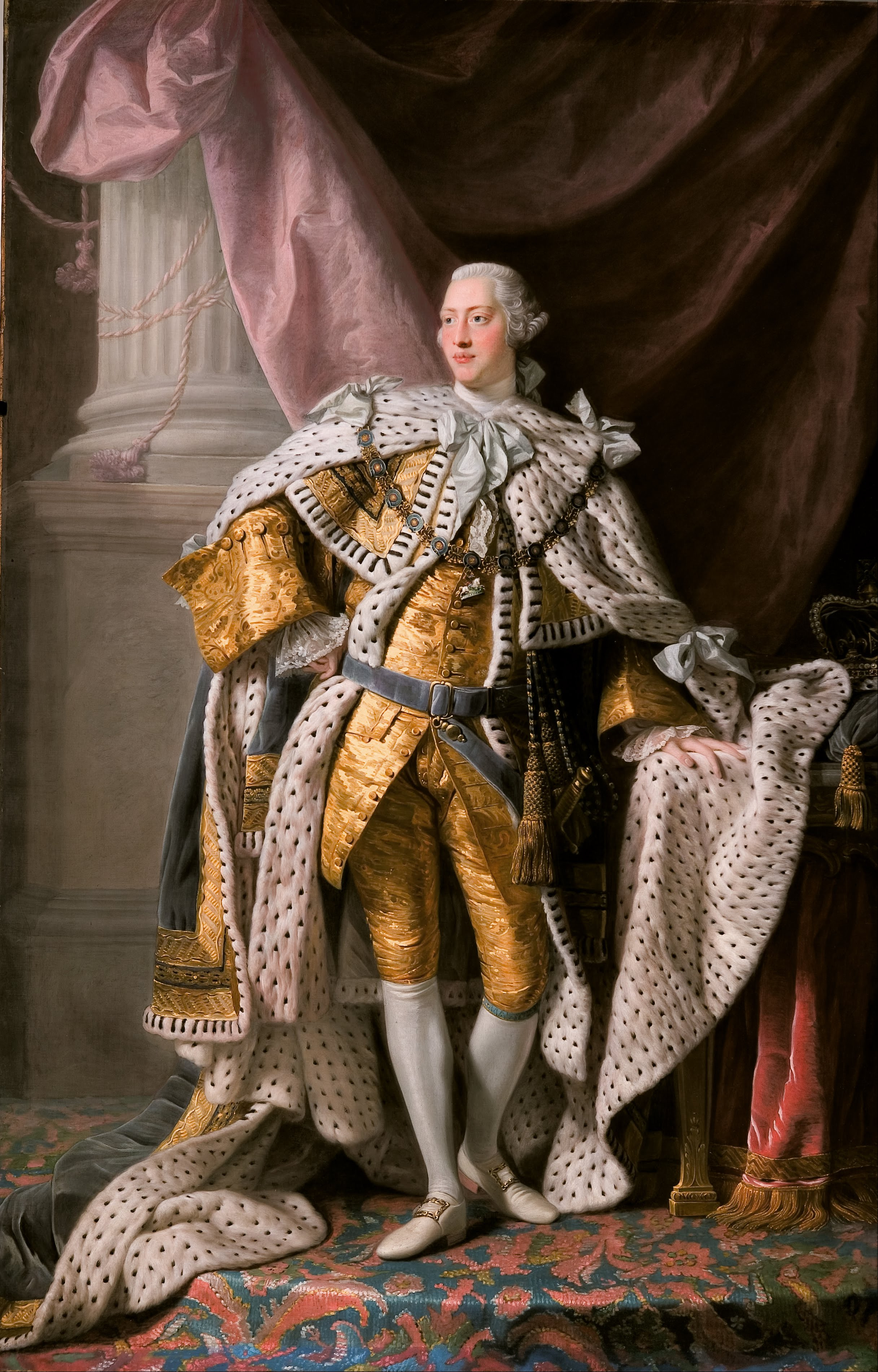 |
| King George III |
Monday, March 24, 2014
Did Lincoln free the slaves, or did the slaves free themselves?
Abraham Lincoln's Emancipation Proclamation said that on January 1, 1863, all slaves held in Southern states would be "forever free." President Lincoln himself believed that if anyone remembered his achievements as president, the Emancipation Proclamation would be what they remembered about him. However, historians have pointed out that Lincoln's proclamation did not free slaves in border states that were still part of the Union, and did not free slaves in the Confederate states unless they were liberated by the Union army. Others have claimed that the slaves themselves actually should get credit for obtaining their own freedom.
Your assignment is to use primary and secondary sources to write a one-paragraph response that answers this important historical question: "Did Lincoln free the slaves, or did the slaves free themselves?"
(The image below is Lincoln's signature on the Emancipation Proclamation. It is one of the few documents that President Lincoln signed with his full time. He usually signed, "A. Lincoln" to most documents.)
Subscribe to:
Posts (Atom)